Most rental deals fall apart slowly. You tour the property, ask a handful of questions, get attached to the kitchen, and only then sit down to run the numbers. By that point you have spent hours on a property you were never going to buy.
The fix is to treat the first 30 minutes as a screen, not an appraisal. You are not trying to predict the next decade. You are answering one question: is this worth a second look? Four calculations and a short red-flag list will tell you.
What the 1% Rule Actually Measures
The 1% rule compares monthly rent to purchase price. A $250,000 property renting for $2,500 a month hits 1%. A $300,000 house renting for $2,100 sits at 0.7% and fails the screen.
The rule is crude on purpose. It ignores taxes, insurance, loan terms and vacancy, but it forces you to compare dozens of listings on one scale in seconds. It also assumes something important: that rent, not appreciation, is doing the heavy lifting.
In expensive markets, very few properties clear 1%. That is not a reason to throw out the screen. It means you are buying future appreciation, and your monthly cash flow will be thin for years. That can be a legitimate plan. It is a dangerous accident.
Minute 0–5: Run the Rent Test
Use market rent, not the seller's projection. Pull three comparable listings within a mile, same bed and bath count, similar condition. If the seller says the unit will rent for $2,600, but nearby comparable units are asking $2,300, run your numbers at $2,300. Asking rents also tend to run ahead of what tenants actually sign, so lean conservative.
- Rent-to-price: monthly rent ÷ purchase price. At 1% or better, keep going.
- Gross rent multiplier: price ÷ annual rent. Lower is better; this is just a quick comparability check against other local deals.
- Rent reality check: does the current rent roll match today's market, or has it been sitting flat for three years?
Minute 5–15: Build a Real Expense Estimate
Start with gross annual rent, then subtract what it actually costs to own the place. Skip the mortgage for now; that comes next.
- Property taxes: pull the county figure, and find out whether a sale triggers reassessment where you invest.
- Insurance: get an actual quote. Older roofs, old wiring, and coastal or wildfire exposure can change the number dramatically.
- Vacancy: one month of rent per year is a reasonable starting assumption; more in soft markets.
- Maintenance and repairs: roughly 5–10% of gross rent for a property in decent shape.
- Property management: 8–10% of collected rent, even if you plan to self-manage. Plans change.
- Capital reserves: another 5% for the roof, HVAC, and water heater that are always coming.
- HOA dues, owner-paid utilities, lawn and snow: easy to forget, impossible to escape.
A useful sanity check is the 50% rule: operating expenses often land near half of gross rent. If your list comes in far below that, you have probably missed something.
If a deal only works with zero vacancy, no repairs and free management, it does not work.
Minute 15–22: Cap Rate and Cash-on-Cash Return
Cap rate is net operating income divided by purchase price. It describes the property without any debt attached. Take a $250,000 duplex with $30,000 in gross annual rent and $13,200 in operating expenses. Net operating income is $16,800, so the cap rate is 6.7%. Compare that with similar properties in the same submarket. A big gap usually signals a difference in condition, risk, or rent assumptions, not a bargain.
Cash-on-cash return brings your loan into the picture. It is annual pre-tax cash flow divided by the cash you put in.
A worked example
- Loan of $187,500 at 7% over 30 years: about $1,250 per month, or $15,000 a year.
- Cash flow: $16,800 − $15,000 = $1,800 a year, or $150 a month.
- Cash in: $62,500 down, roughly $6,000 in closing costs, and $6,000 held back for turnover and repairs, about $75,000.
- Cash-on-cash: $1,800 ÷ $75,000 = 2.4%.
That is thin. A larger down payment, a lower rate, or a small rent increase changes the picture quickly, which is exactly why you run it with real numbers from your lender rather than a rule of thumb. Rates move, and your loan terms are yours alone.
Minute 22–28: The Red-Flag Pass
Numbers can look fine while the property quietly carries risk. Scan for these before you get excited.
- Rents that do not match the market or the rent roll.
- Big-ticket systems near end of life: roof, HVAC, sewer line, foundation, electrical panel.
- Insurance that is hard to obtain or surprisingly expensive.
- HOA rental caps, waitlists, pending special assessments or litigation.
- Taxes likely to jump after the sale closes.
- One-employer towns, shrinking population, or a wave of new rental supply nearby.
- Unpermitted additions or extra units, which can complicate financing and create legal exposure.
- Water in the basement, persistent musty smells, signs of pests.
Any single flag is worth noting. Two or three together is usually your answer.
Minute 28–30: Decide, Don't Deliberate
Three outcomes are acceptable: pass, dig deeper, or make an offer. Write your assumptions on one page and move on. If the deal is genuinely close, spend the next hour on the things that rule properties in or out: an inspection walkthrough, a real insurance quote, the tax record, and a conversation with a lender.
Practice, Then Trust Your Filter
Run this framework on ten listings you have no intention of buying. The first few take thirty minutes. By the tenth, the 1% test and expense estimate take five, and you will have a clear sense of what your market actually tolerates. That instinct is worth more than any single formula.
The 1% rule will not find you a great deal on its own. What it does is keep you from spending three evenings on a property that was never going to cash flow. Combined with cap rate, cash-on-cash return and an honest red-flag pass, it turns a weekend of vague research into a thirty-minute decision.
The figures above are illustrative, not a forecast or a recommendation. Before you commit to a purchase, confirm property taxes, insurance costs, financing terms and tax treatment with a lender, an insurance agent and a qualified accountant or attorney in your area.
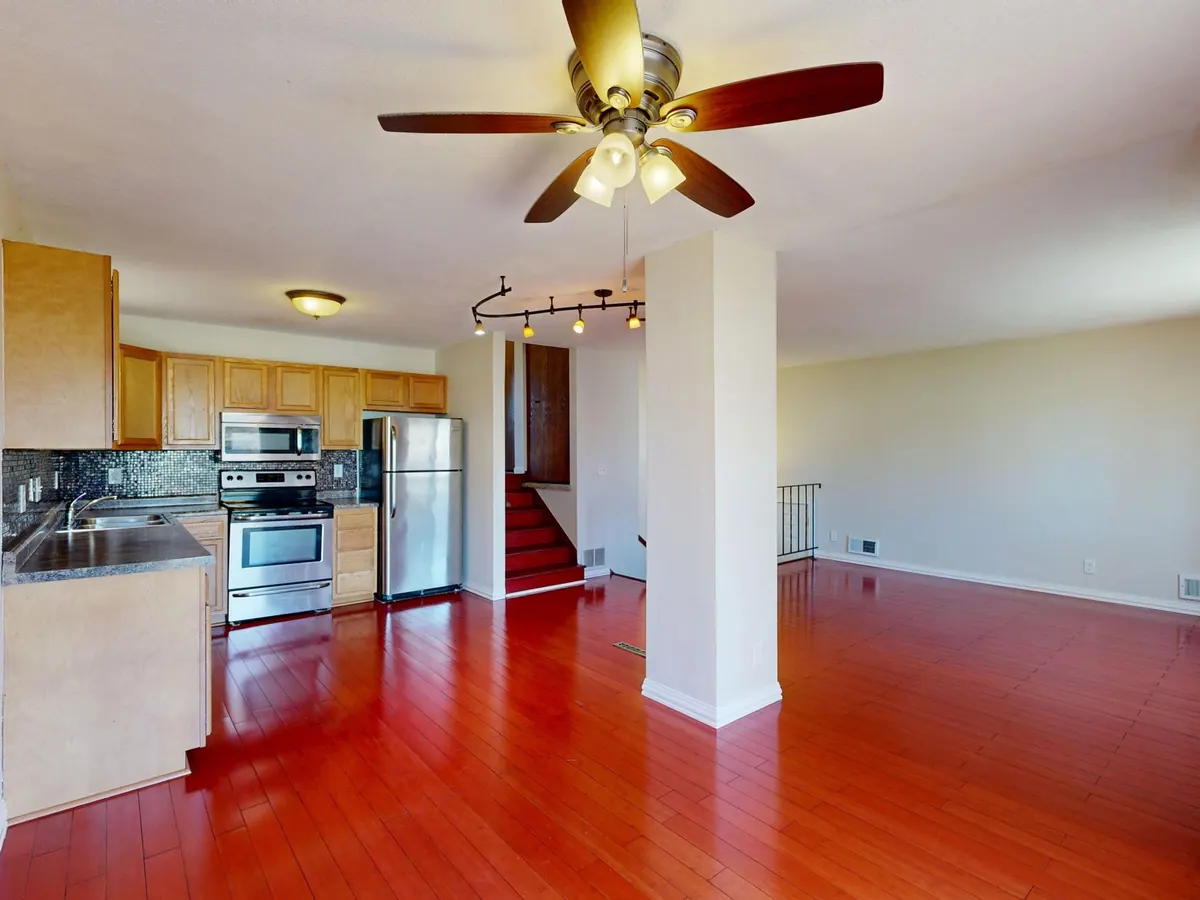
Photo: RDNE Stock project / Pexels